
Loading...
Serving Stephenville, TX and surrounding areas. (254) 362-0219
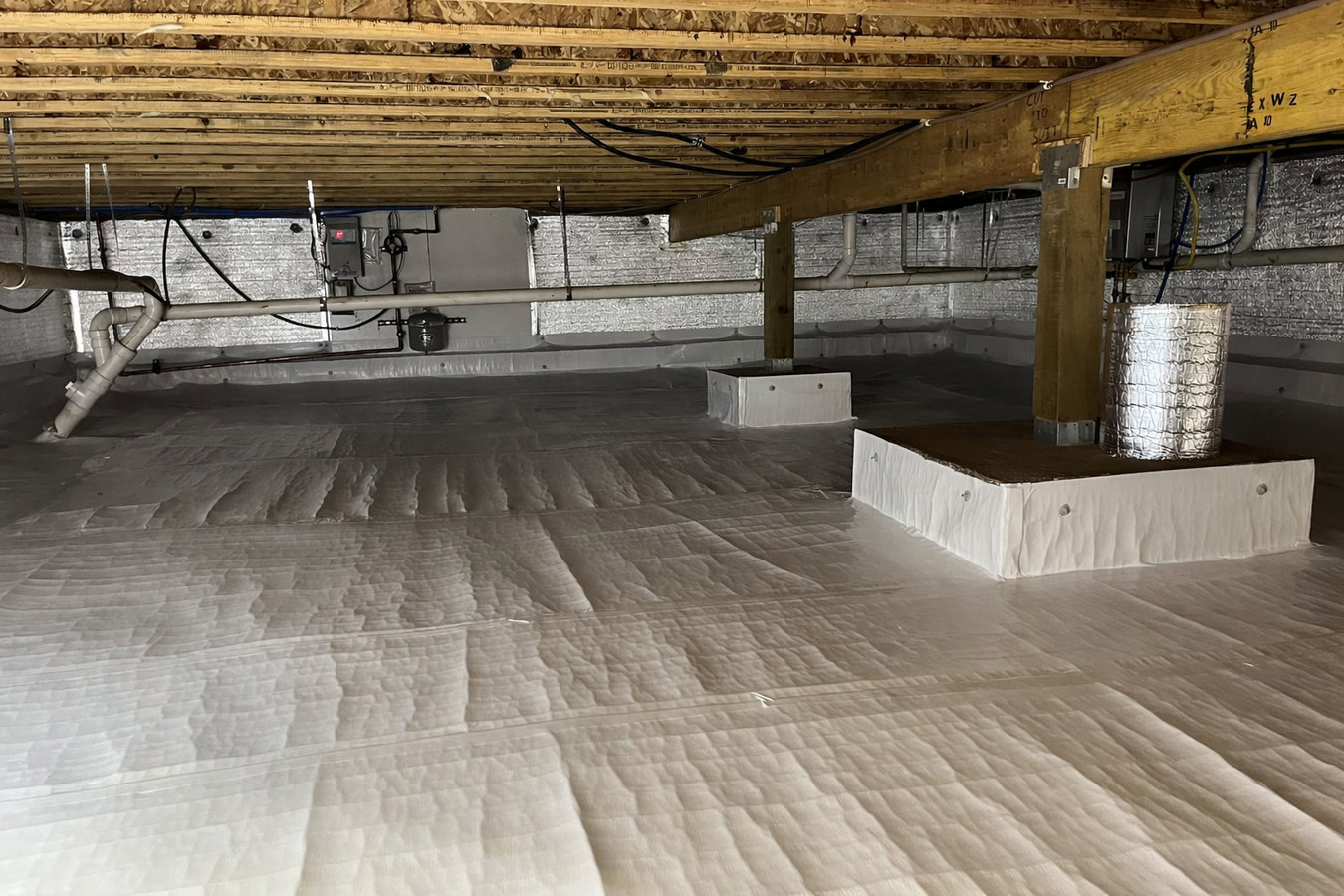
Erath County clay soil holds moisture year-round. A properly installed vapor barrier stops that moisture before it softens your floors or grows mold under your home.
A crawl space vapor barrier in Stephenville is a heavy plastic sheet laid across the bare dirt floor of your crawl space to block ground moisture from rising into your home - most jobs on a standard single-family home are completed in one full day with no need to vacate the house.
If you have noticed soft spots in your floors, a musty smell that gets worse after rain, or condensation on pipes under your home, those are signs that moisture from the ground is already at work. Stephenville sits on clay-heavy Erath County soil that stays damp long after a storm passes - which means the underside of your home is under constant moisture pressure from May through September and beyond. A vapor barrier cuts that off at the source, before it reaches the wood framing that holds your floors up.
In some cases, a vapor barrier pairs naturally with crawl space insulation to address both moisture and heat loss in a single project. If you are not sure which one your home needs first, a quick inspection will give you a clear answer.
If certain spots on your floor give slightly when you walk on them, moisture damage to the wood underneath may have already started. In Stephenville's clay-soil environment, this kind of damage develops quietly over several years before it becomes obvious. The longer you wait, the more expensive the fix becomes.
A persistent earthy or musty smell inside your home - especially in rooms closest to ground level - is one of the clearest signs that moisture is building up below. In Stephenville, this smell often worsens in late spring and early summer when clay soil is saturated and temperatures start climbing. If the smell comes and goes with the weather, the crawl space is almost certainly the source.
If you have ever looked under the house and seen water droplets forming on metal pipes or HVAC ducts, that is a clear sign ground moisture is actively moving through the space. This is especially common during Stephenville's humid summer months. Left alone, it leads to rust on metal components and rot on wood ones.
If your home was built before 1990 in one of Stephenville's established neighborhoods and no one has ever looked at the crawl space, the moisture protection is likely minimal or has broken down over time. Older vapor barriers made from thin plastic often crack, tear, or shift out of place over the decades. A quick inspection tells you exactly what you are dealing with.
We install heavy-duty polyethylene vapor barriers in crawl spaces across Erath County and the surrounding area. Every installation starts with clearing out any debris and removing old, damaged material from the crawl space floor. We then roll out overlapping sections of thick plastic sheeting, seal every seam with vapor barrier tape, and run the material up the foundation walls so moisture has no path in from the sides. For homes where moisture control is only part of the picture, vapor barrier installation can extend to other areas of the home including basement walls and under-slab applications, depending on your home's construction.
We also assess whether your situation calls for drainage improvements before the barrier goes in. If water is actively flowing into the crawl space rather than just rising from the ground, crawl space insulation and drainage work may need to happen first. We will tell you honestly which situation you have before any work is quoted or scheduled.
Best for most Stephenville homes - covers the entire dirt floor with overlapping, sealed seams to stop ground moisture at the source.
Right for crawl spaces that see occasional foot traffic from plumbing or HVAC work, or where long-term durability is the priority.
Suits homes where moisture also enters from the foundation walls - sheeting runs up and is mechanically fastened for a complete seal.
Ideal when the crawl space has old insulation, organic debris, or a degraded existing barrier that needs to be cleared before new material goes in.
Stephenville's Erath County location puts homes on some of the most moisture-retentive soil in North-Central Texas. Clay soil absorbs rainwater slowly and releases it even more slowly - which means the ground under your crawl space stays damp long after a storm moves through. Pair that with long, genuinely humid summers where dew points stay elevated from May through September, and you have a crawl space that is working against you for most of the year. Homeowners in Glen Rose and nearby communities deal with the same clay-soil moisture conditions, and the same solution applies.
Many of Stephenville's established neighborhoods - particularly homes near the downtown area and Tarleton State University - include houses built from the 1950s through the 1980s. Homes from that era were often built with vented crawl spaces and minimal moisture protection by today's standards. If your home is more than 30 years old, the original vapor barrier - if there was one - has likely degraded or was never installed to current standards. Homeowners across the broader service area, including those in Granbury, frequently ask about vapor barriers for the same reason: aging housing stock and persistent soil moisture go together.
The U.S. Department of Energy recommends moisture control as one of the highest-impact steps homeowners can take to protect their home's structure and indoor air quality. DOE guidance on moisture control makes clear that vapor barriers in crawl spaces are a proven first line of defense - not a premium upgrade. For Stephenville homes with clay soil underfoot, that advice applies directly.
You reach out by phone or through our contact form. We ask a few basic questions - home age, any smells or soft spots you have noticed, whether you know if there is existing barrier material down there. You do not need to have all the answers. We reply within 1 business day to schedule a visit.
Before any work is quoted, we physically get into your crawl space to check the size, access, existing conditions, and whether any prep work is needed. This visit is free - and it is the only honest way to give you an accurate price. Be cautious of anyone who quotes a firm number without seeing the space.
The crew removes any old material and debris, then rolls out heavy sheeting in overlapping sections across the entire floor, tapes every seam, and runs the material up the foundation walls. Most jobs take one full day. You do not need to leave the house - the work happens entirely underneath it.
When the job is done, we walk you through what was installed - or show you photos if the space is too tight to inspect yourself. We point out the access hatch and explain what a healthy crawl space looks like going forward. No cleanup needed on your end, and the barrier works immediately.
Free estimate, no obligation. We come out, look at the crawl space, and give you a straight answer - no pressure to book on the spot.
(254) 362-0219We work in Stephenville and the surrounding area regularly, and we understand that clay soil here behaves differently than sandy soil in other parts of Texas. That shapes what materials we recommend and how we install them. A contractor who does not know the local soil conditions may undersize the barrier or skip wall termination, which leads to failure within a few seasons.
We do not quote jobs over the phone without seeing the space. Every estimate starts with a free in-person crawl space assessment so you know exactly what you are paying for - and why. If all you need is a basic barrier, that is what we tell you. If you need drainage work first, we say that too.
We use thick, puncture-resistant sheeting - not the flimsy 3-mil plastic you can find at a hardware store. Thicker material holds up through plumbing service calls and pest activity, and it lasts significantly longer in crawl spaces where conditions are less than ideal. The Building Science Corporation crawl space guide supports heavier-gauge material as a best practice for crawl space moisture control.
We operate as a local business with a real address in Stephenville - not a traveling crew that disappears after the check clears. Every job starts with a free written estimate and ends with documentation of the work done. If something is not right, you can reach us.
These are not talking points - they are how we run every job. Homeowners in Stephenville's older neighborhoods call us back when they have another project because they know what to expect the second time.
Full vapor barrier service covering crawl spaces, basement walls, and other moisture entry points throughout your home.
Learn MoreThermal insulation for crawl space floors and walls that pairs with a vapor barrier for complete moisture and energy control.
Learn MoreStephenville summers are long and clay soil stays wet. A vapor barrier installed now stops the damage before it starts - call us today for a free crawl space assessment.