Loading...
Serving Stephenville, TX and surrounding areas. (254) 362-0219
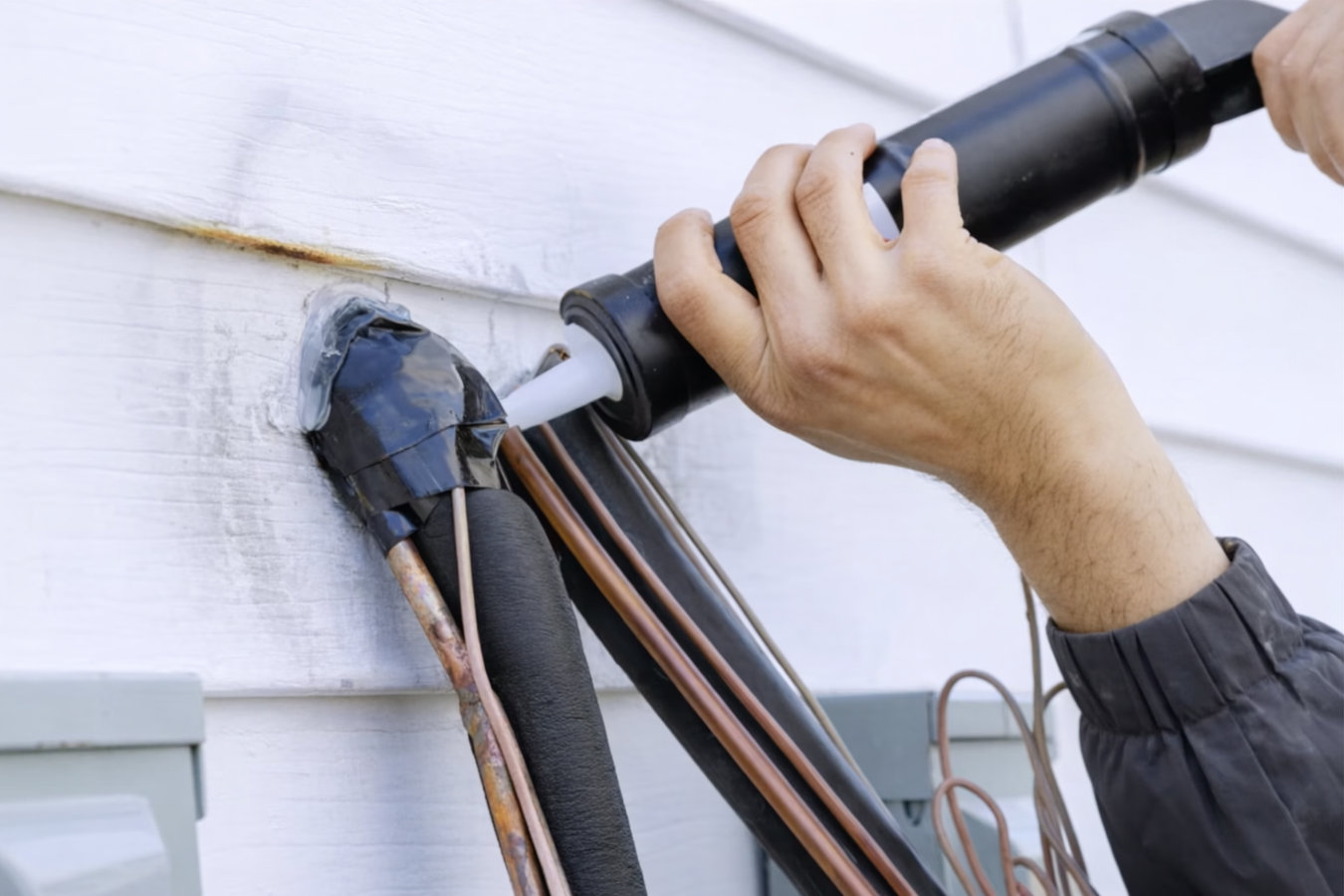
Hidden gaps in your attic, walls, and crawl space let conditioned air escape year-round. We find every leak and seal it so your home holds temperature and your AC stops running nonstop.
Air sealing services in Stephenville find and plug the small cracks, gaps, and openings in your home's attic, walls, and crawl space that let conditioned air escape and outdoor air sneak in - most jobs take one day and work happens primarily in out-of-the-way spaces like the attic and crawl space, not your living areas.
A significant portion of Stephenville's housing stock was built in the 1960s through 1980s, before air sealing was a standard part of construction. Decades of settling have opened additional cracks in the framing since then. The result is a home that lets your expensive cooled or heated air leak out continuously - and forces your HVAC system to compensate by running almost nonstop. Air sealing works as a team with basement insulation and attic air sealing to address every zone where your home's envelope is losing the battle.
The work is mostly invisible once it is done - foam and caulk go into gaps in your attic, behind outlet covers, and around pipes in your crawl space. You will not see most of it after the job is finished, but you will feel the difference in how consistently your home holds temperature between AC cycles.
If your electric bill climbs sharply when summer heat arrives in Stephenville and stays high for months, your home is likely losing conditioned air through gaps in the ceiling and walls. A well-sealed home holds its cool air much more efficiently, so the air conditioner does not have to run as long or as hard. If neighbors in similar-sized homes are paying noticeably less, air leakage is a likely reason.
If one bedroom or the back of the house never seems to cool down no matter how long the AC runs, that is a classic sign of air leakage nearby. Gaps in the ceiling above that room allow hot attic air to seep in and push out the cool air your system is working to maintain. This problem is especially common in Stephenville homes built before the 1990s, where room additions or remodels often left new gaps unsealed.
Hold your hand near an electrical outlet or light switch on an exterior wall. If you feel a faint stream of air, that is outdoor air coming through the gap behind the cover plate. The same thing can happen along baseboards where the floor meets the wall. These are small gaps individually, but across an entire house they add up to a significant amount of air exchange every hour.
Stephenville residents who experienced the February 2021 freeze know how quickly an older home can lose heat when temperatures drop into the teens. If your home felt impossible to keep warm during that event, or if you noticed frost forming on interior walls or around windows, your home's air barrier has significant gaps. Sealing those gaps now means you will be in a much better position the next time a hard freeze hits North-Central Texas.
Every air sealing job starts with a diagnostic step - we use a blower door to measure your home's leakage and pinpoint where air is moving before we seal anything. That means we fix the actual problems, not just the obvious ones. In most Stephenville homes, the attic floor is where the biggest leaks are found - around light fixtures, plumbing penetrations, and the gaps where interior walls meet the ceiling. Sealing those attic bypasses paired with attic air sealing delivers the biggest immediate impact on cooling bills.
For older pier-and-beam homes - which are common in Stephenville's established neighborhoods - the crawl space is another major leakage zone. We seal penetrations in the crawl space floor and around the foundation as part of a complete whole-home approach. Pairing air sealing with basement insulation addresses both the air movement and the heat transfer in homes that have accessible foundation spaces. The result is a home that responds predictably to your thermostat instead of fighting it.
Ideal for homeowners who want to know exactly how leaky their home is before any work begins - we measure first, then seal the right spots.
Best for homes where high cooling bills and hot rooms point to heat pouring down from a leaky attic floor - the highest-impact zone for most Stephenville homes.
Best for pier-and-beam homes and homes with basement areas where cold air, moisture, and pests enter through gaps in the foundation zone.
Best for homes that have never been professionally sealed before - we work through every zone from attic to crawl space and verify results with a follow-up pressure test.
Stephenville sits in Erath County where summer temperatures regularly climb above 100 degrees. When your attic reaches extreme temperatures on a July afternoon, even small gaps in the ceiling allow superheated air to pour into your living space and force your air conditioner to work overtime. Homeowners across the area - from Godley to Mineral Wells - see the same pattern: cooling bills that spike in June and do not recover until October. That is the signature of a home losing conditioned air faster than the AC can replace it.
Stephenville's spring and fall humidity also creates a specific challenge. When a home is air sealed without accounting for how moisture moves through walls and ceilings, condensation can build up in hidden spaces and lead to mold or wood rot over time. This is especially relevant in older Stephenville neighborhoods where pier-and-beam foundations are common - the crawl space below is a moisture entry point that needs to be part of any air sealing strategy. Our approach accounts for both airflow and moisture so the fix holds up through every Texas season.
We will ask a few questions about your home's age and any comfort problems you have noticed. We reply within 1 business day and can typically schedule an initial visit within a few days to a week.
We walk through your home, inspect the attic and crawl space, and set up a blower door to measure how leaky your home is and pinpoint exactly where air is moving. This takes one to two hours and gives us a clear picture before any work begins.
We walk you through what we found and explain what we recommend sealing and why. You receive a written estimate before any work is agreed to, and you should feel comfortable asking questions about anything that is not clear.
The crew works primarily in your attic and crawl space, using foam and caulk to seal gaps around pipes, wires, light fixtures, and framing. When done, we run the blower door again to confirm leakage actually improved, then walk you through what was done.
Free blower door assessment. Written estimate before any work begins. No obligation.
(254) 362-0219We use a blower door to measure your home's air leakage before work starts and again after it is finished. That gives you a real number showing exactly how much improved - not just a contractor's word that the job is done. That documentation also helps when you file for the federal energy efficiency tax credit.
We have worked on pier-and-beam homes near Stephenville's older neighborhoods and newer slab-foundation homes on the city's edges. Stephenville's 1960s and 1970s housing stock tends to have specific gap patterns around original plumbing and electrical boxes - we know where to look because we have seen it repeatedly.
Sealing gaps without accounting for how moisture moves through walls and ceilings can cause condensation in hidden spaces - especially during Stephenville's humid spring and fall seasons. We seal in a way that manages moisture as well as airflow, which matters most in older homes with pier-and-beam foundations.
Building Performance Institute standards inform how we evaluate your home's air barrier as a complete system. That means we address the interactions between your attic, walls, crawl space, and HVAC rather than sealing only the obvious spots.
Diagnostic testing, local housing knowledge, moisture awareness, and a whole-home approach are what separate a lasting air sealing job from one that misses the real problems. We stand behind our work with documentation you can keep and use when claiming available energy efficiency tax credits.
Learn more about professional air sealing standards at Building Performance Institute (BPI) and explore available tax credits at IRS Energy Efficient Home Improvement Credit.
Insulate foundation spaces to stop cold floors, frozen pipes, and energy loss from the bottom of your home.
Learn MoreTargeted sealing of attic bypasses around light fixtures, plumbing, and top plates where most homes lose the most air.
Learn MoreCall today to schedule your free blower door assessment and find out exactly how much air your home is losing - and what it costs you every month.